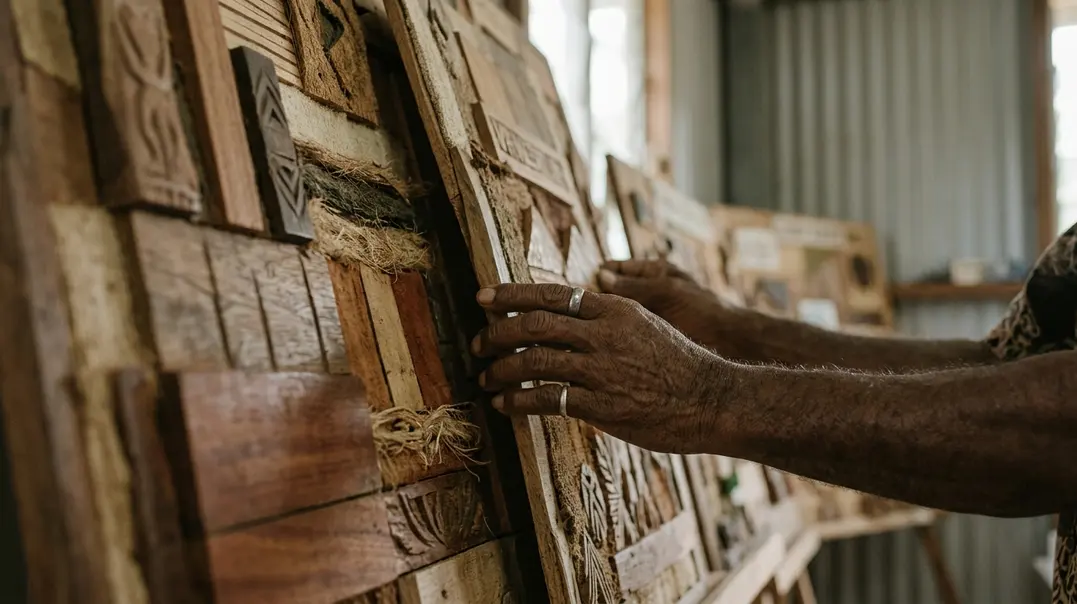
Vanuatu is not a place where Kastom sits neatly behind the present. It walks through the village with a mobile phone in one hand, a woven mat under the other arm, and a decision to make before nightfall.
I set the scope of this work by following the visual impact of seasonal worker remittances between 2018 and 2022, not by chasing untouched villages. The sharper story was in daily architecture: a thatch roof replaced by corrugated iron over a roughly 3 to 5 year span, a new concrete step beside an old meeting house, a solar panel leaning against a wall blackened by cooking smoke. That is where cultural shift leaves its fingerprints.
Contents
- The Intersection of Kastom and Modernity
- Developing a Visual Language for Kastom
- Photographing Climate Change as a Cultural Catalyst
- Navigating the Ethics of the Outsider Lens
- Practical Approaches to Long-Form Storytelling in the Tropics
- The Responsibility of the Visual Storyteller
The Intersection of Kastom and Modernity
The mistake is to photograph Vanuatu as if time has split in two. On one side, the ceremonial ground. On the other, the cargo ship, the remittance, the school uniform, the imported roofing sheet. The truth is rougher—and more useful.
Kastom is not a relic. It is a working system of social law, belief, land memory, rank, exchange, and obligation. Modernity does not simply arrive and erase it. Sometimes it pays for a new church roof. At other times, it funds a nephew’s school fees. It can also change who has visible authority in a village because seasonal work overseas has brought new money into old kinship structures.
The photojournalist’s challenge is to hold both facts in the frame without turning people into symbols. A man standing near a corrugated iron house is not evidence of cultural loss by default. A woman carrying woven mats past a concrete water tank is not a tidy metaphor for tradition surviving progress. She may simply be walking to a ceremony, and the tank may have been the most practical thing built that year.
Observation: The strongest image often comes from the collision of ordinary details, not from the most visually theatrical ceremony.
Effective documentary work in Vanuatu requires cultural immersion before visual certainty. It asks the photographer to learn what should not be photographed, what must be contextualized, and what the community itself considers central. That last point matters. Outsiders often arrive with a ready-made hunt for “authenticity.” Villages usually live with something more complex.
Developing a Visual Language for Kastom
Start with function, not ornament
Kastom includes traditional culture, law, and religion, but those words feel too clean for fieldwork. In the village, Kastom appears through who speaks first, who sits where, who gives, who receives, who can cross a boundary, and who cannot. The camera has to learn these rules before it can describe them.
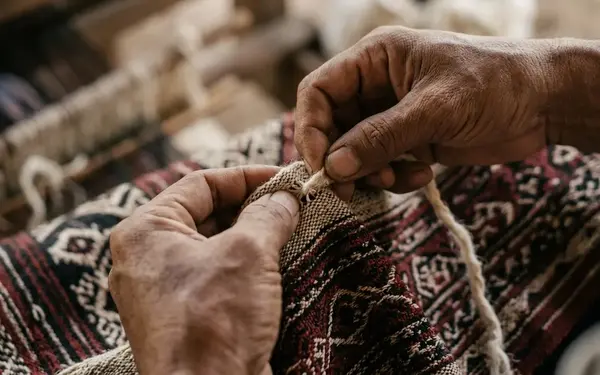
Visual markers matter: grade-taking ceremonies, pigs as traditional wealth, woven mats, carved posts, yam houses, nakamal spaces, and architecture shaped by land, wind, and lineage. But photographing the marker alone is thin work. A pig tied beside imported plastic chairs tells a fuller story than a tight portrait of tusks. A woven mat carried past a small shop says more than a staged still life in soft light.
At first, the instinct can be to frame out modern objects to capture a “pure” vision of Kastom. That approach creates a museum narrative that many communities reject because it removes the world they actually live in. Attempting to document Kastom by staging subjects in traditional dress without their everyday modern tools results in a sterile, historically inaccurate representation that local communities often reject.
Widen the frame
A practical shift helps: move from an 85mm lens to a 35mm focal length when the story depends on environment. The tighter lens can flatter a face, but it often strips away the evidence. The wider frame lets plastic chairs, imported fabrics, phone chargers, church walls, and ceremonial objects occupy the same visual field.
Grade-taking ceremonies now may include 2 or 3 modern elements such as plastic chairs, imported cloth, or manufactured containers. These items do not weaken the photograph. They make it honest.
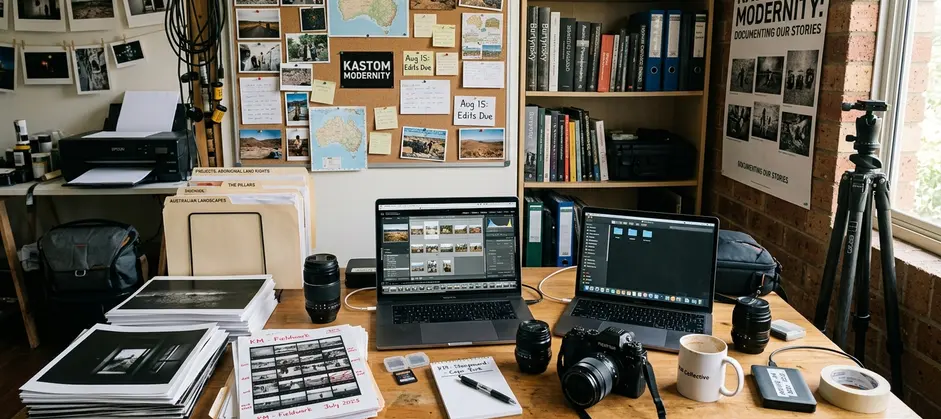
The aim is not to make every image visually crowded. It is to avoid false removal. A clean frame can still lie.
Photographing Climate Change as a Cultural Catalyst
Villages do not relocate as a news event. They shift in conversations, garden paths, soil choices, timber stacks, and grief carried quietly from one shoreline to another.
Climate change in Vanuatu is cultural before it is scenic. Rising seas and extreme weather alter burial grounds, food systems, clan boundaries, and the felt relationship between people and ancestral land. The visual markers of climate adaptation differ drastically between the volcanic islands of Tanna, where ash impacts agriculture, and the low-lying coral atolls of the Torres Islands, where saltwater intrusion dictates the narrative.
The phrase “slow violence” is useful because the camera struggles with gradual harm. A flooded road after a storm is easy to photograph. Soil becoming less dependable is harder. Salt creeping into a garden does not perform for the lens.
Photograph what changes hands
One method is to follow the work rather than the disaster. Gardens moving inland. Yam mounds prepared in altered soil. Canoes repaired farther from the place where they were once pulled ashore. Houses dismantled in pieces, then reassembled roughly 300 to 500 meters inland.
Yam harvesting cycles that shift by roughly 3 to 4 weeks due to changing rainfall patterns deserve the same attention as a damaged coastline. The photograph may look quiet: hands sorting seed yams, a family clearing a new plot, a child standing near a half-built house. But that quiet is the point. Displacement often looks ordinary while it is happening.
Regional environmental work by the Secretariat of the Pacific Regional Environment Programme (SPREP) gives important context, but the photographer still has to translate that context into human terms. No graph can replace the expression of someone deciding whether to leave land tied to their grandparents.
Risk: If climate adaptation is photographed only at the crisis point, the cultural cost becomes invisible.
Navigating the Ethics of the Outsider Lens
Colonial photography in the Pacific left damage. It classified, staged, stripped context, and turned living communities into evidence for someone else’s argument. Any foreign photojournalist working in Vanuatu enters that history, whether they acknowledge it or not.
The outsider lens has limits. It can notice pattern, texture, and contradiction, but it can also mistake access for understanding. It can exoticize a face by removing the person’s agency. It can turn ceremony into spectacle. The work begins with admitting that the camera is not neutral.
Consent is a process
A workable protocol starts before the first exposure. Present a printed portfolio of previous Pacific documentary work to the village council so chiefs and elders understand the visual style, the likely use of the images, and the intent behind the project. Spoken explanation matters, but photographs explain the photographer more honestly than promises do.
Initial meetings and kava ceremonies may take roughly 4 to 6 days before the first photograph. That time is not a delay. It is part of the work. During those days, the photographer learns who can grant permission, who should be consulted separately, which spaces are restricted, and which subjects carry spiritual or political weight.
Image review sessions with around 10 to 15 community elders can prevent serious misrepresentation. Elders may identify a gesture, rank marker, or relationship that the photographer has missed. They may also reject an image that seems strong to an outside editor but wrong within the village.
This method has a hard limit: collaborative storytelling models require subjects who have the time and desire to review images, which is often impossible during rapid-onset disaster coverage. The ethical standard remains, but the method must adjust to the conditions.
Practical Approaches to Long-Form Storytelling in the Tropics
Long-form work in Vanuatu is built as much in storage habits as in conversation.
Remote islands punish carelessness. From aggregated reporting, ambient humidity can sit between roughly 85 and 90 percent. Power access may depend on a folding solar panel not far from 21 watts that gives only about 3 to 4 hours of viable charging time per day. Cameras fog. Batteries drain. Chargers fail at the exact moment the light turns good.
Choose low-profile resilience
- Use roll-top dry bags with rechargeable silica gel instead of bulky hard cases when moving through villages and small boats.
- Separate camera bodies and lenses overnight so one condensation problem does not take out the entire kit.
- Carry fewer lenses and learn them well; the wrong lens changed often in humid air is worse than a modest kit used steadily.
- Plan charging around sun, cloud, and community schedule rather than assuming power will appear.
Bulky equipment can create distance. A lower-profile kit changes the room. People stop watching the cases and start watching the person carrying them.
Let the camera arrive late
Slow journalism is not romantic. It is practical. Spending weeks or months in a single community gives the work a chance to move beyond first impressions. Trust rarely forms while the camera is raised.
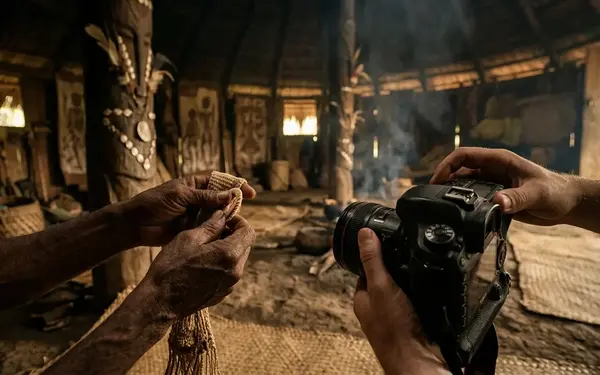
Participating in community life matters: drinking kava, sharing meals, attending meetings without photographing them, helping carry something when help is needed. These acts do not buy access. They remove the fiction that the photographer is only an observer.
A village does not move like a market chart; treating cultural change as a simple binary produces brittle storytelling. There is no simple up-or-down outcome. A roof changes, a ceremony adapts, a garden moves, a child leaves for school, and the old obligations remain.
Working approach: Build the story calendar around recurring labor: planting, fishing, church days, council meetings, market travel, and ceremony preparation.
The Responsibility of the Visual Storyteller
The final edit is where many documentary projects become extractive. The fieldwork may be careful, the relationships sincere, and the captions accurate, yet the edit can still privilege what a distant audience finds dramatic over what the community considers meaningful.
A stronger process gives weight to images community members identify as culturally significant during field review. That might mean keeping a modest photograph of a mat exchange over a more theatrical portrait. It might mean sequencing the story around land, obligation, and continuity rather than crisis.
Return the record
The archive should not travel in only one direction. Delivering an archival box of about 40 to 50 physical prints to the village chief creates a local object that can be held, stored, shown, and argued over. Providing a localized digital archive of roughly 150 to 200 high-resolution files for the community school gives younger people access to a record of their own place.
For a global audience, these photographs can explain the pressure points of cultural change in the Pacific. For the village, they may become family memory, teaching material, or evidence of a ceremony conducted properly. Those uses are not secondary. They are part of the responsibility.
Ethical photojournalism in Vanuatu does not guarantee perfect understanding. It does something more disciplined: it slows the photographer down long enough to notice what should not be simplified.
The enduring power of this work lies in respect joined to accuracy. Not distance. Not spectacle. Respect with enough patience to see how Kastom continues to shape the present while the present reshapes the visible form of Kastom.