The 1999 Referendum and the Immediate Aftermath
The August 30, 1999 ballot promised sovereignty but delivered immediate devastation. During the 3- to 4-week period following the vote, a scorched-earth withdrawal left the territory in ruins. Power grids across 4 to 5 major districts were completely dismantled. Documenting this physical destruction was the initial reflex of many arriving observers. The visual evidence of burnt buildings and shattered roads provided immediate proof of the violence.
However, capturing shattered infrastructure proved insufficient for the historical record. The aftermath of conflict is rarely a straightforward calculation. Financial analysts accustomed to tracking the Dow Jones Industrial Average or analyzing the S& P 500 often seek clear, quantifiable metrics of recovery. Yet post-conflict trauma resists such binary options. The reality on the ground demanded a different form of observation. The collective determined that survivors' psychological wounds also had to be documented, prompting a deliberate editorial shift toward the unseen effects of violence on the newly independent nation.
The Challenge: Navigating Trauma and Media Suspicion
Initial access was strictly restricted to a 15- to 20-kilometer radius around Dili. Moving beyond this perimeter required navigating severe language barriers, logistical nightmares, and profound local suspicion. Foreign observers faced delays of 48 to 72 hours simply waiting for clearance from local community leaders. This friction was entirely justified.
The ethical dilemma of photographing trauma without becoming extractive loomed large over every interaction. Communities had just survived a systematic campaign of terror, and the sudden influx of international cameras often felt like a secondary violation. To mitigate the risk of being perceived as exploitative foreign media, establishing a baseline of trust became the primary objective before moving into more remote, heavily impacted areas. The presence of the United Nations Transitional Administration in East Timor added layers of bureaucratic complexity, requiring photographers to prove their intentions to both international peacekeepers and local chieftains.
Critical Insight: Attempting to parachute into a post-conflict zone with a tight 48-hour editorial deadline often results in superficial, highly guarded portraits that fail to capture the community's actual recovery dynamics.
The Solution: Empathy, Patience, and Establishing Ground Rules
Securing safe transit into remote areas presented two distinct paths. One approach involved hiring international security contractors to force entry into volatile districts. This was quickly discarded. Armed escorts immediately alienated traumatized populations, creating an insurmountable barrier between the lens and the subject. The alternative required collaborating with local Timorese fixers and translators, treating them as cultural liaisons rather than mere guides.
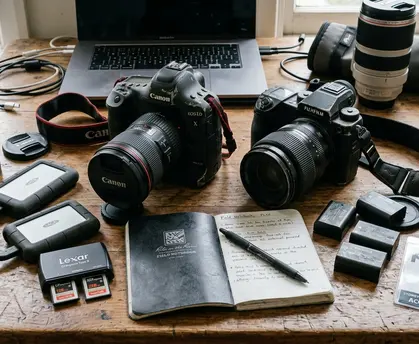
This method prioritized 'slow journalism' principles. Practitioners committed to spending 3 to 4 days in a village without unpacking camera gear. They focused entirely on human connection, sharing 2 to 3 meals daily with local families prior to any documentation. A continuing affiliation across several project phases established the collective's credibility among regional leaders.
Risk Factor: Relying solely on unarmed local fixers exposes crews to severe physical risks in zones where active militia skirmishes have not fully ceased.
Despite the inherent dangers, this patient methodology secured authentic access. By prioritizing listening over shooting, photographers dismantled the traditional power dynamics of photojournalism, allowing the subjects to dictate the pace of their own representation.
Results: Authentic Documentation and Lasting Ties
The qualitative outcomes of this patient approach were profound. Photographers gained access to intimate, unguarded moments that fast-paced news crews missed. The resulting archive honored the resilience of the Timorese people rather than just their victimization. Recognizing that the story extended far beyond the immediate crisis, the collective decided to maintain long-term contact with their subjects.
This decision shifted the archive's focus from tragedy to the slow process of rebuilding. From aggregated reporting, return visits spanning 14 to 18 days every two to three years allowed for the archiving of just over 4,500 medium-format negatives. Sustained cooperation produced a respectful historical record. The relationships built during the 1999 aftermath evolved into lasting ties, transforming a temporary documentary assignment into a lifelong commitment to visual sovereignty.
Applying the Timor-Leste Protocol: A Step-by-Step Guide for Community Entry
Based on trial and error during the 1999 deployments, the collective formalized the camera-free introduction period as a mandatory standard operating procedure for all new members entering sensitive environments. The effectiveness of a camera-free introduction period depends heavily on the community's prior exposure to international media; highly documented areas may require longer trust-building phases than isolated villages.
Recommendation: The Timor-Leste Protocol Pre-Entry Checklist
- Research local customs and identify key community leaders prior to arrival.
- Secure a respected local liaison to act as a cultural translator.
- Commit to a 48-hour camera-free introduction period upon entering the community.
Step 1: The Pre-Arrival Briefing
Identify the village elder or designated representative through your cultural liaison before crossing the district boundary. Present your intentions verbally upon arrival. Offer a clear, jargon-free explanation of where the images will reside, who will see them, and what purpose they serve. Do not produce a camera during this initial meeting.
Step 2: The Camera-Free Introduction
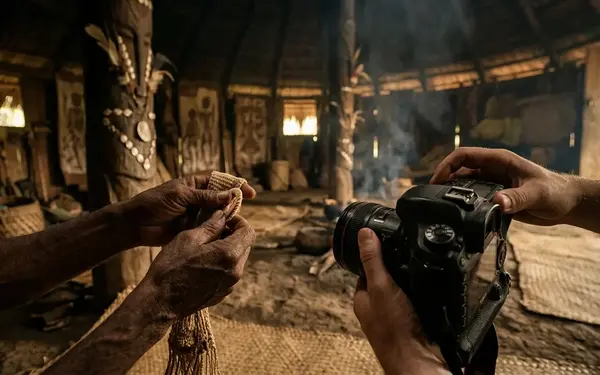
Initiate the strict 48-hour camera-free introduction period immediately after the briefing. Leave all equipment secured in your lodging. Spend the first two days participating in daily routines—fetching water, sharing meals, or simply sitting in communal spaces. When the camera is finally introduced on the third day, establish verbal consent cues within the first 10 to 15 minutes of a portrait session. If a subject breaks eye contact or shifts their posture defensively, lower the lens immediately. Reaffirm their agency in the process. Wait for their explicit permission to resume, ensuring the documentation remains a collaborative act rather than an extractive one.