Introduction: Framing a Nation in Transition
Afghanistan resists the single frame. It is a country of overlapping histories, where empire, faith, and survival have layered themselves into the texture of daily life. Most of what reaches the outside world arrives as crisis imagery — the explosion, the queue, the grieving face cropped for maximum impact.
The visual diary began as a rejection of that shorthand. Reviewing just over 400 wire submissions filed between August and November 2021, one absence became impossible to ignore: the ordinary domestic life of Kabul was entirely missing. No kitchens. No schoolyards. No men arguing over tea. The headlines documented the rupture but never the continuity beneath it.
So the objective narrowed. Rather than chase the next event, the work would settle into three distinct neighborhoods in Kabul and stay there — long enough to record resilience as a daily condition rather than an exceptional one. The diary became a method: intimate, slow, and accountable to the people inside the frame.
The Challenge: Navigating Access, Security, and Trust
Trust does not arrive with a press lanyard. In volatile districts, credentials can mark a person as a target rather than a guest, and the standard reflex of arriving, shooting, and leaving corrodes the very access it depends on.
The approach inverted that reflex. For nearly two weeks, the team carried no equipment at all. They shared meals, sat through conversations they could not photograph, and let their presence become familiar before a single shutter opened. Integration came first; documentation followed only once it had earned a place.
Geography reinforced the patience. Operating within a strict four-block radius kept the same faces appearing day after day, building the kind of recognition that no introduction can manufacture. Familiarity, not novelty, was the security strategy.
That still left the hardest tension unresolved: the imperative to document collides with the duty to protect. A photograph that illuminates a story for distant readers can expose its subject to retaliation at home. Every frame carried that calculation, and many were never made because the risk sat on the wrong side of the ledger.
The effectiveness of community trust varied sharply between rural provinces, where any camera was viewed with suspicion, and urban centers like Kabul, where residents were more accustomed to media presence.
The Solution: Unobtrusive Methodology and Gear
The first instinct was wrong. Standard DSLR rigs with 70-200mm lenses promised physical distance and safety, but the large glass provoked immediate anxiety at checkpoints — and worse. Attempting to use long telephoto lenses in urban markets resulted in immediate hostility and the confiscation of memory cards by local patrols.
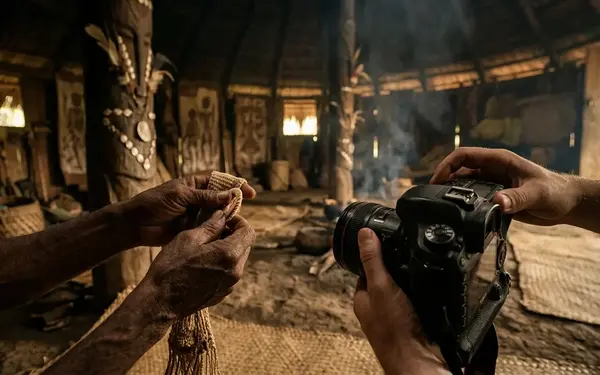
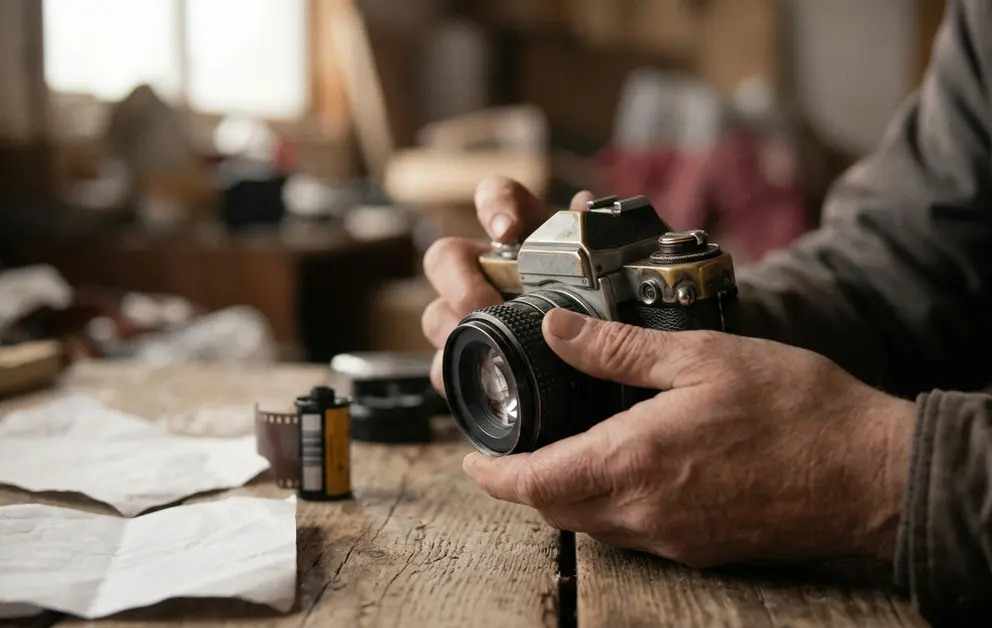
The replacement was deliberately small. Fixed 35mm and 50mm lenses on rangefinder-style bodies forced proximity, which sounds like a liability and turned out to be the opposite. A photographer standing close, visibly, with a modest camera reads as a participant rather than a sniper of images.
This is where collaborative documentation took shape. Subjects knew they were being photographed and consented to it; the camera was never a hidden instrument. The work belonged, at least partly, to the people in front of it.
Workflow Under Unstable Infrastructure
Power and connectivity could not be assumed, so the workflow was built to survive both. Film carry was capped at four to five rolls per day, a discipline that limited losses during unexpected searches at checkpoints. Digital captures were backed up the moment stable power appeared, never deferred.
Field Security and Analog Workflow Protocol
- Verify the local fixer's community standing prior to neighborhood entry.
- Limit daily film carry to reduce confiscation risks at checkpoints.
- Establish clear non-verbal consent cues with subjects before raising the camera.
- Separate exposed film from digital media so a single search cannot erase a day's work.
- Back up digital frames the moment stable power becomes available.
Scope and Limitations: What Remains Unphotographed
A foreign lens carries its own distortions, and pretending otherwise would be dishonest. The diary records what a guest was permitted to see — never the full interior life of households that, quite reasonably, kept parts of themselves closed.
The hardest boundaries concerned grief. A consent-first protocol governed every traumatic scene: if verbal or clear non-verbal permission could not be secured within roughly a 30-second window following an incident, the camera stayed down. That rule led to the intentional exclusion of shy of 15 specific incidents involving acute medical trauma. Those moments exist in memory, not in the archive, and that was the correct trade.
Lowering the camera became a practice rather than an exception. Dignity outranked the photograph whenever the two competed, a position consistent with established ethical guidelines for covering conflict and trauma.
Risk Factor: This slow-journalism approach is entirely unsuited for breaking news environments where editors require image transmission within minutes of an incident. It buys depth by spending time, and time is the one resource a wire desk cannot extend.
Curating the Diary: Editing for Nuance
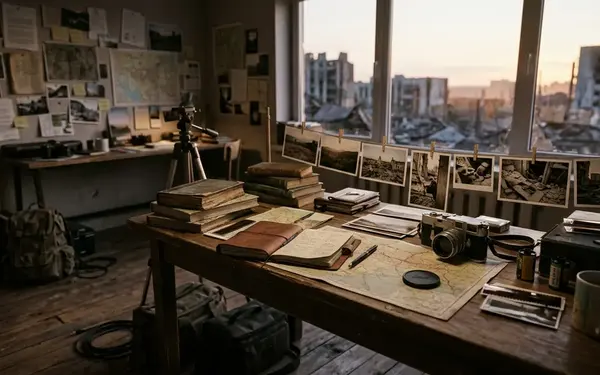
The edit happened on a studio floor, not a screen. Roughly 1,200 printed frames were physically arranged and rearranged, grouped by emotional resonance and visual rhythm rather than chronology alone. Sessions ran several hours a day over about three weeks, and the tactile process surfaced relationships between images that a digital grid flattens.
Sequencing carried the argument. A visual diary lives or dies by what follows what — a moment of laughter placed beside loss reframes both, and a careless order can collapse a person into a stereotype. The goal was a chronological narrative that held tragedy and ordinary humanity in the same breath.
Photo editors served as the necessary friction here. Their job was partly adversarial: to flag any frame that, lifted from context, would reinforce a tired and harmful image of the country. Several technically strong photographs were cut for exactly that reason.
Critical Insight: Sequencing is editorial argument. The order of images decides whether an audience sees individuals or symbols, and that decision sits with the editor as much as the photographer.
Results: Archival Value and Shifting Perspectives
The diary's value reveals itself slowly, in two registers. In gallery exhibitions, the intimate framing held audiences longer than wire photography typically does — viewers lingered because the people in the frames were rendered as neighbors rather than headlines.
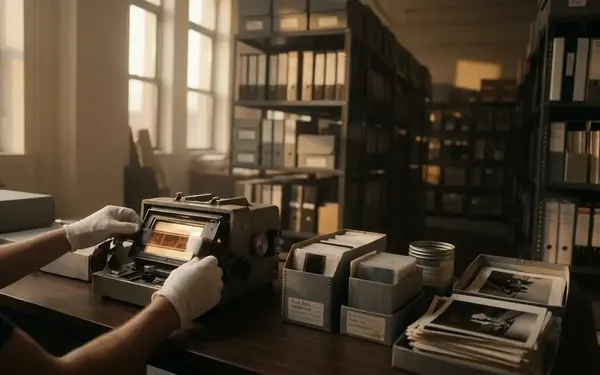
Preservation was treated as seriously as capture. Negatives were digitized at roughly 3,200 dpi, and a dual-location strategy split the original silver gelatin prints from the high-resolution scans across two separate climate-controlled facilities, so no single failure could erase the record.
The longer arc points elsewhere. For future historians and for the Afghan diaspora, these frames may matter most as evidence that daily life continued — that resilience was not a slogan but a routine of meals, work, and small defiances. That archive is the quiet result, and it will outlast every news cycle that ignored it.