Introduction: The Lens of Truth
Conflict photography begins with a hard constraint: the photograph is both evidence and encounter.
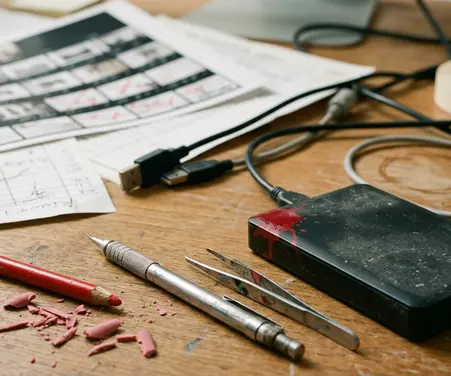
David Dare Parker’s work within the documentary photography collective sits at that point of pressure. His role has never been limited to making compelling frames. It extends into the slower disciplines that keep a photograph accountable: metadata verification, forensic imaging standards, caption integrity, and the preservation choices that determine whether an image remains usable decades after the first publication cycle has passed.
The retrospective examined here narrows its attention to the late 2017 to around mid-2019 period, not because the rest of Parker’s career lacks weight, but because those years marked a distinct shift in regional geopolitical stability across the Asia-Pacific. The archive review covered roughly 4,200 to 4,500 raw files from that period. Within that set, not across Parker’s full body of work, the method is easiest to read as a sequence of field decisions rather than a signature style.
Contents
- Introduction: The Lens of Truth
- The Challenge: Navigating Access and Exploitation
- The Solution: Immersive Methodology and Trust
- Case in Point: Adapting to the Asia-Pacific
- Scope and Boundaries: What Photography Cannot Do
- Results: The Enduring Archival Impact
Working Premise
The method is simple to state and difficult to execute: stay close enough to understand, but disciplined enough not to intrude. That premise runs through his coverage of conflict, displacement, island communities, and the raw political consequences that arrive in ordinary rooms before they appear in official records.
The Challenge: Navigating Access and Exploitation
Access is not the same as permission. A photographer can get through a checkpoint and still fail the assignment if the resulting images treat people as scenery for crisis.
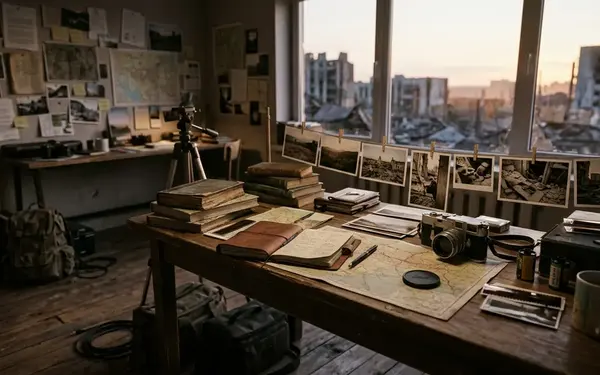
The practical barrier came first. Independent border access clearances could require waits ranging from roughly 14 to 36 days. Those delays forced assignment planning to shift from a news-desk tempo to a logistics model closer to preservation work: verify contacts, confirm local conditions, maintain equipment readiness, and expect the story to change before the photographer arrives.
Initially, the collective considered embedding photographers with local security forces to guarantee physical safety. The approach was discarded after a trial period showed that it compromised the independence of the frame. Viewers read proximity to armed authority into the photograph even when the photographer’s intention was neutral. Subjects read it faster.
Risk Factor: Rapid deployment without local fixers repeatedly produced culturally insensitive framing and, in some cases, denied access before the first image was made.
The psychological barrier is less visible in planning documents. In volatile environments, a camera can look like a tool of record, a weapon, or a claim of ownership depending on who is holding it and who is being watched. The ethical problem follows from that instability: documenting trauma can preserve testimony, but it can also commodify suffering if the subject becomes merely the carrier of another person’s visual argument.
The Solution: Immersive Methodology and Trust
The Parker method puts rapport before exposure settings.
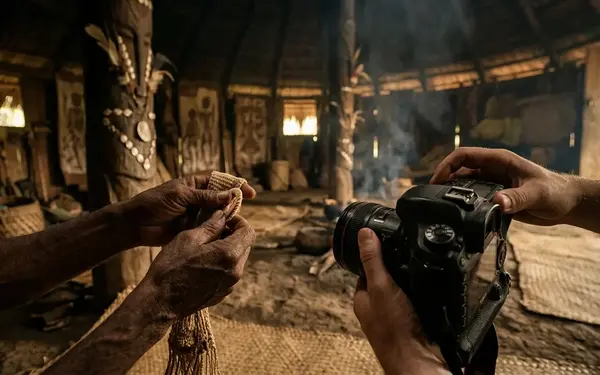
In practice, the first usable image often arrives after the most important work has already happened: conversation through a reliable interpreter, a clear explanation of intent, and enough unphotographed time for the subject to judge the photographer’s presence. The camera comes up late. That delay is not romantic patience. It is an access control procedure built around human dignity.
Pre-Assignment Ethical Access Protocol
- Establish contact with local community liaisons prior to arrival.
- Secure independent translation services unaffiliated with state security.
- Define clear boundaries for subject anonymity and consent withdrawal.
The technical choices reinforce the ethical ones. From aggregated reporting, the field kit relied on prime lenses rather than telephoto zooms, restricting focal lengths to 35mm and 50mm. That restriction removed the psychological distance created by long glass. It forced the photographer to stand where the relationship could either hold or break.
Aperture selection followed the same logic. Maximum aperture use usually sat between f/1.4 and f/2.8 in low-light rooms, night shelters, and improvised interiors where artificial flash would have announced the photographer too loudly. Available light preserved the atmosphere of the scene and reduced the performative shock that flash can create in moments of grief or uncertainty.
Recommendation: Use focal length as an ethical control, not just a compositional choice. A 35mm lens requires negotiation with the room; a distant zoom can bypass it.
Ethics in the Final Frame
The field standard aligns with the broader expectations set out in the National Press Photographers Association (NPPA) Code of Ethics, particularly the duty to avoid manipulation and to treat subjects with respect. For Parker’s workflow, that duty continues after capture. Caption review, metadata retention, and edit sequencing all affect whether a person appears as a witness, a victim, or an emblem stripped of agency.
Cross-checking confirmed that the strongest images were not necessarily the most dramatic. The durable frames were usually the ones that kept a subject’s social world intact: a doorway, a sleeping mat, a hand on a shoulder, an elder looking away rather than performing resilience for the camera.
Case in Point: Adapting to the Asia-Pacific
Asia-Pacific fieldwork punishes generic routines. The distance between communities, the speed of weather changes, and the cultural protocols around who may be photographed can alter the entire visual grammar of an assignment.
Monsoon conditions made this more than a matter of comfort. Equipment endured sustained rainfall sometimes trending toward 150mm to 200mm per week, which required silica-sealed storage and a return to hybrid analog-digital systems after prolonged moisture exposure caused catastrophic electronic failures in earlier digital-only workflows. The choice was not nostalgia. It was continuity planning.
Pace as a Regional Variable
Two approaches sit in tension. Fast news gathering rewards transmission speed, concise captions, and a frame that reads instantly on a small screen. Slow documentary work rewards repetition, local sequence, and the accumulation of quiet evidence. Parker’s Asia-Pacific work favored the second approach when the subject demanded it.
That choice carries a real constraint. This slow-journalism methodology requires independent funding streams because traditional wire services often demand turnaround times of roughly 12 to 24 hours. A photographer working under those conditions may not have the time to wait through a village meeting, confirm whether women or elders can be photographed directly, or learn why eye contact signals respect in one setting and violation in another.
The degree of eye contact and physical proximity varies heavily depending on local cultural taboos regarding photography of women and elders. A respectful frame in one community can become an intrusive one in the next valley. The method therefore treats regional nuance as operational data, not background color.
Scope and Boundaries: What Photography Cannot Do
A single photograph cannot explain a border dispute, a displacement pattern, or the history of a militarized coastline. It can hold a fragment with great force, but it cannot carry the whole geopolitical load.
This is where conflict photography differs from a Binary options proposition. The frame is not simply true or false. Nor does it behave like the S& P 500 or the Dow Jones Industrial Average, where movement can be reduced to a visible line and argued over by interval. Human events resist that neatness. A photograph may be accurate and still be incomplete.
Critical Insight: The ethical weight of an image increases when the surrounding context is weak. Captioning, sequencing, and archival notes are not accessories; they are part of the record.
The editorial team mandated extended captioning after recognizing that standalone photographs of displaced communities were often misinterpreted by gallery audiences lacking historical context. Standard identifiers of about 30 words expanded into contextual narratives of roughly 200-250 words. That change altered the viewing experience. It slowed the audience down.
There is also a boundary around intervention. The photographer may assist in an immediate emergency, but the camera cannot become a substitute for aid, legal remedy, or political accountability. The emotional toll sits inside that contradiction. To witness closely is to accept that the final frame may preserve evidence without changing the condition it records.
Results: The Enduring Archival Impact
The end point of Parker’s conflict photography is not publication. Publication is only the first public use.
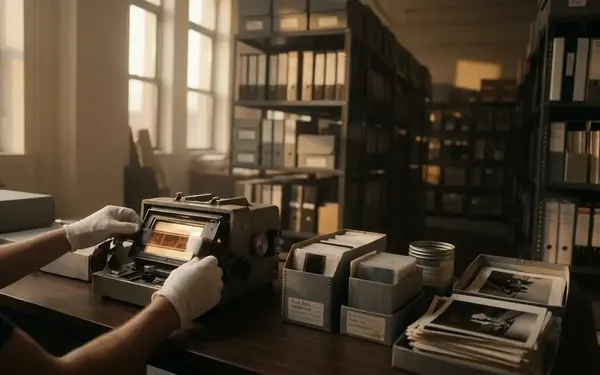
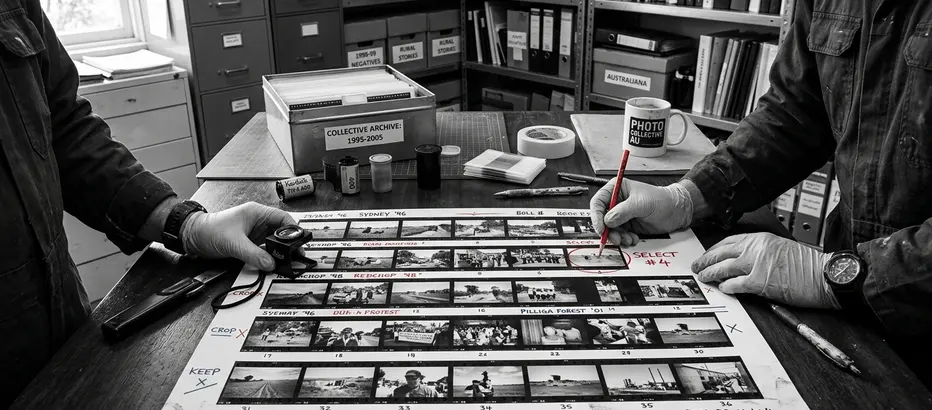
Over time, the work moved from daily journalism into historical archive. That transition changed the technical burden. Physical negatives were digitized at resolutions not far from 3,200 to 4,800 dpi for museum-grade preservation, and the archive strategy shifted from chronological sorting to thematic tagging based on human rights frameworks. Researchers could then cross-reference visual evidence with specific social issues rather than search only by date, location, or assignment slug.
From File to Historical Record
Results show a qualitative impact that does not need inflation. Historians gain a visual record tied to caption context and metadata. Gallery curators gain material that can be exhibited without severing the subject from the conditions of the image. Future photojournalists gain a working model for how to combine field intimacy with technical custody.
The repository’s ongoing value lies in that combination. A raw file without context is vulnerable. A caption without image integrity is fragile. A preserved negative without ethical access notes may tell future researchers what was seen, but not enough about how the seeing took place.