Tim Page did not photograph war from a safe remove. He pushed into it, close enough that the difference between his frames and the men he photographed was sometimes a matter of inches. His name belongs to a small group of photojournalists who treated the front line not as a destination but as a place to live, and his work — from the rice paddies of Vietnam to the medical wards documenting Agent Orange decades later — reshaped what the public understood war reporting could be.
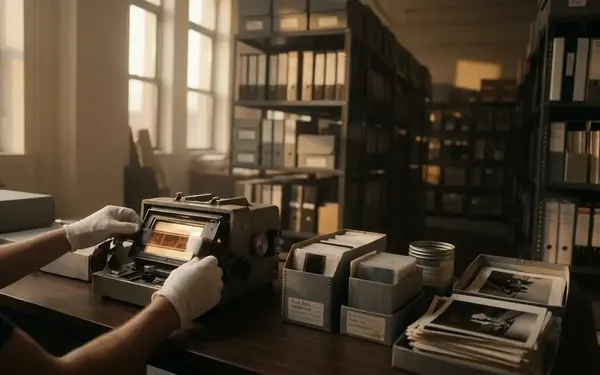
The method behind the man matters here: how he got there, what it cost him, and why archivists still sequence his early portfolio to set a deliberate trap: adrenaline first, then grief.
The Uncompromising Lens of a Photojournalism Icon
Page belonged to a generation that learned its craft inside the conflict itself, not in a classroom. There was no syllabus for proximity. You either walked toward the sound or you didn't, and Page walked toward it for the better part of the active frontline combat coverage years from 1965 to 1969.
What separates his archive from the wider sea of Vietnam imagery is the deliberate arc inside it. Archivists reviewing his early deployments — initial passes encompassing more than 4,000 individual frames in archival summaries — describe a sequencing strategy that is almost theatrical. They open with the kinetic, high-contrast combat work, the pushed film and the smoke, establishing a baseline of adrenaline-fueled proximity. Then the pacing slows. The later material breathes differently.
The emotional weight of his imagery shifts dramatically depending on whether the viewer is examining his high-contrast, pushed-film combat frames or his deliberate, slow-shutter post-war documentation.
That contrast is the spine of his legacy. Read the action shots alone and you misread the man.
The Crucible of Combat: From UPI Stringer to TIME-LIFE
The numbers tell the early story plainly. As a stringer for UPI, Page was paid roughly $15 to $25 per published frame and often humped 15 to 20 rolls of high-speed black-and-white film on every patrol. The economics were brutal and the math was simple: more patrols, more frames, more rolls home.
His move to primary assignments for TIME-LIFE was not automatic, and the decision was sharper than it looks in retrospect. When the chance came to restructure his career, he initially weighed staying an independent stringer purely to keep absolute copyright control over his negatives. He discarded that option. The reach of a major magazine — the distribution, the placement, the audience — outweighed the ownership he would have to surrender.
What earned him those assignments was an immersive instinct that set a new bar for frontline reporting. He didn't position himself near the action. He embedded inside it, often staying with units through the worst of an engagement when the safer play was a long lens from the treeline.
Why the Proximity Mattered
Distance flattens war into geometry. Page's refusal of distance is precisely what makes the frames hard to look away from. The viewer occupies the same patch of ground as the subject, and there is no comfortable vantage to retreat to.
Expanding the Lens: The 1967 Six Day War
Southeast Asia made his name, but Page was not a single-conflict photographer. The 1967 Six Day War, covered across the tight window of June 5 to June 10, demonstrated a versatility that few of his peers attempted.
The assignment carried a deliberate editorial logic. Western press pools had already concentrated heavily on the Israeli side, so editorial coordinators chose to embed Page with Arab forces to secure a counter-narrative. The result was a perspective on the conflict that much of the European and American audience simply was not seeing elsewhere.
The work also exposed the era's hard logistical ceiling. Film transit delays of two to three days via regional couriers stood between the shutter and the European darkrooms. A photographer documenting a six-day war knew that some of his most urgent frames would land after the shooting stopped.
Page's willingness to shoot from the less-covered side of a conflict was not a stunt. It reflected a working conviction that a story told from one vantage is only half-reported, and that complex geopolitical conflicts require multiple lenses pointed in opposite directions.
The Physical Toll: Surviving Severe Combat Injuries
From aggregated reporting, in April 1969, shrapnel changed everything. Surgeons removed around 200 cubic centimeters of brain tissue. What followed was an initial acute hospitalization and intensive therapy period lasting about 10 months, and the injury left him hemiplegic.
The rehabilitation choices reveal who he was. Recovery strategies prioritized the fine motor skills in his right hand over immediate mobility — a calculated medical decision aimed squarely at letting him operate a camera again. He chose the shutter finger over the ability to walk easily.
Severe traumatic brain injuries resulting in hemiplegia permanently alter spatial perception. Page faced a complete mechanical relearning of how to frame and focus a 35mm rangefinder — relearning, in effect, how to see through glass at all.
This is the cost that the action shots never advertise. The work that made him also nearly ended him, and the recovery reframed his entire understanding of what war leaves behind. After this, the question that drives the rest of his career is no longer about the moment of impact. It is about the years after.
A 25-Year Mission: Documenting the Agent Orange Tragedy
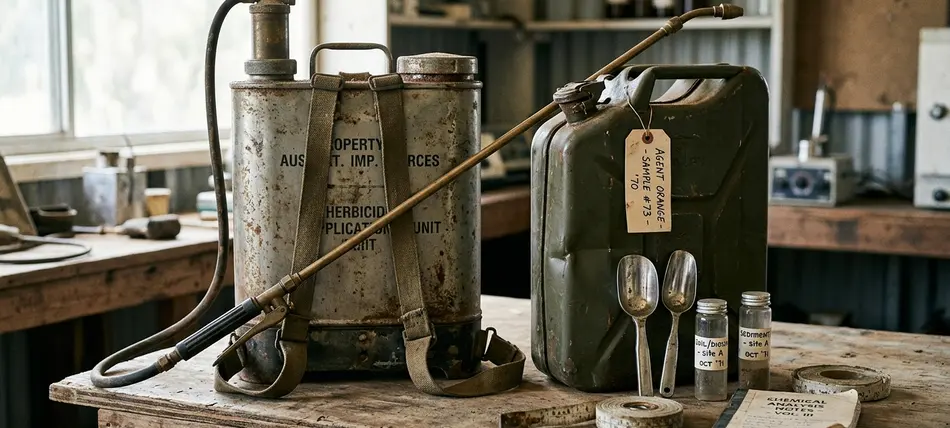
The most radical thing Page ever did was slow down. After a career built on speed, he committed to a documentation project of roughly 25 years examining the generational damage of Agent Orange across the Mekong Delta.
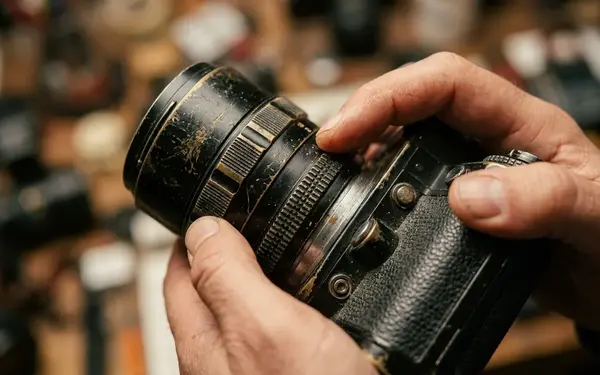
The technical shift was total. He abandoned the rapid-fire 35mm techniques of his youth in favor of medium format cameras on tripods, a setup that forces a slower, more deliberate frame. You cannot run with a tripod. That was the point.
The project tracked the medical anomalies of specific families across 3 to 4 generations, following bloodlines rather than battles. The work became methodical, empathetic portraiture and environmental documentation — patient where the combat work was urgent. For readers tracing the science behind the imagery, the historical documentation of Agent Orange provides the official record his photographs gave a human face.
Archival exhibitions that focus solely on his kinetic combat action shots fail to convey the empathetic depth and technical evolution present in these later environmental portraits. The Page who photographed the children of the Delta is, in the most important sense, a more accomplished photographer than the one who photographed the firefights.
Brotherhood of the Lens: The Search for Flynn and Stone
Conflict photographers form a particular kind of family, bound by shared risk and the names of those who did not come home. For Page, two of those names were Sean Flynn and Dana Stone — friends and fellow photojournalists who vanished in Cambodia.
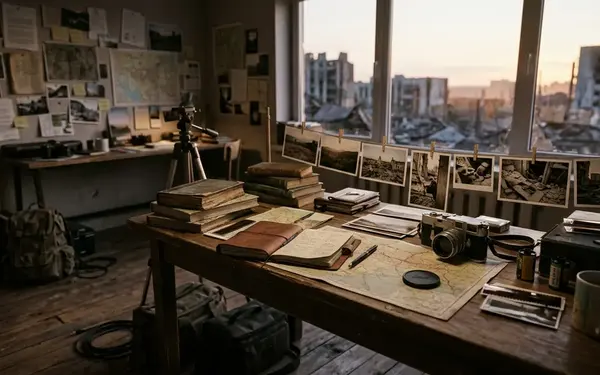
In 1990, Page mounted a focused, roughly three-week ground expedition to find them, or at least to find the truth of what happened. The method was as unconventional as the man. The investigative team bypassed official diplomatic channels, choosing instead to cross-reference declassified aerial reconnaissance maps against oral histories gathered directly from local villagers.
The search concentrated on grid coordinate work along a Highway 1 corridor in Cambodia, not far from 15 kilometers end to end. It was painstaking, partly hopeless, and entirely characteristic.
The quest underscored something the photojournalism community carries quietly: an unresolved grief that does not respect the passage of decades. Page's loyalty to two missing friends, expressed through maps and village conversations rather than ceremony, says as much about him as any photograph he took.
Enduring Impact: The Robert Capa Award and Beyond
Formal recognition came in the shape of the Robert Capa Award, the field's acknowledgment of exceptional courage and enterprise. It is fitting that the award honoring Capa — a photographer who also believed proximity was non-negotiable — found its way to Page.
His influence outlived the assignments. Contemporary photojournalism committees use his portfolio as a benchmark during judging panels, evaluating modern submissions by looking for the same sustained enterprise over months rather than a single lucky frame. His Agent Orange project, in particular, set the standard for what long-form commitment looks like.
The preservation effort matches the ambition of the work. Original negatives are being digitized at around 4000 dpi for museum preservation, and his images now anchor advanced photojournalism ethics courses across roughly a dozen major university programs.
Students examining Page's archive should resist the temptation to study the combat frames in isolation. The ethical lesson lives in the contrast — between the photographer who chased the explosion and the one who returned, twenty-five years later, to photograph the children born into its aftermath.
One honest qualification belongs at the close. Reading a body of work this large through the lens of its most famous images inevitably compresses it, and Page's archive resists compression. The frames that defined an era were never the whole of what he was documenting. They were the entry point. The rest is harder, slower, and arguably more important — which is exactly how he intended it.