The Ethical Cost of the Silent Shutter
Silent, rapid-fire camera setups strip away subject agency and turn human crises into extractive transactions. Modern flagship mirrorless cameras operating with electronic shutters record at 20 to 30 frames per second in complete silence, allowing a photographer to extract 60 to 90 high-resolution exposures during a 3-second burst before a grieving or traumatized person registers the camera's presence. That technological leap comes with a visual defect. Unseen photography steals micro-expressions that were never offered to the public.
Subjects frequently display defensive, startled micro-expressions caught mid-blink, or remain completely unaware they are being documented — our collective's review of archive contact sheets from post-disaster coverage across the Tasman and Coral Seas between 2019 and 2022 revealed as much. The ethical baseline established in the NPPA Code of Ethics demands that we treat all subjects with respect and dignity, giving special consideration to vulnerable people. A silent electronic burst bypasses consent entirely.
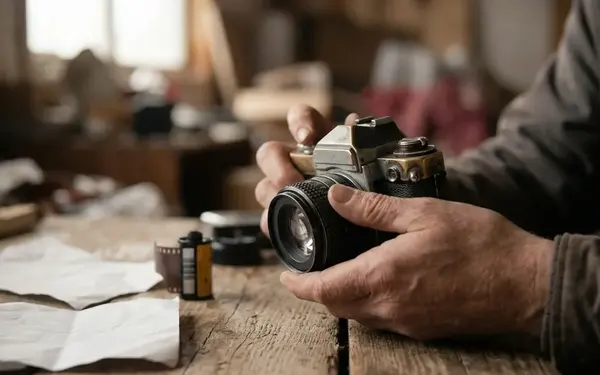
Deliberately carrying heavy, mechanical medium-format or view camera systems introduces necessary friction into sensitive Asia-Pacific assignments. A mechanical medium-format single-lens reflex or field camera weighs between 2.4 and 3.8 kilograms with a standard lens attached. Lifting and positioning that mass requires a two-handed, deliberate physical effort that immediately signals intent from across a room.
How Mechanical Friction Reshapes the Room
To eliminate the confrontational posture of holding a black magnesium brick directly in front of our faces, we initially experimented with compact rangefinders during a 2021 coastal displacement project, but found the eye-level framing still erected an immediate psychological wall between photographer and subject. We pivoted to waist-level finders with flip-up magnifiers and ground-glass backs. Lowering the camera from the eye removes the physical barrier between journalist and resident, allowing direct eye contact while speaking.
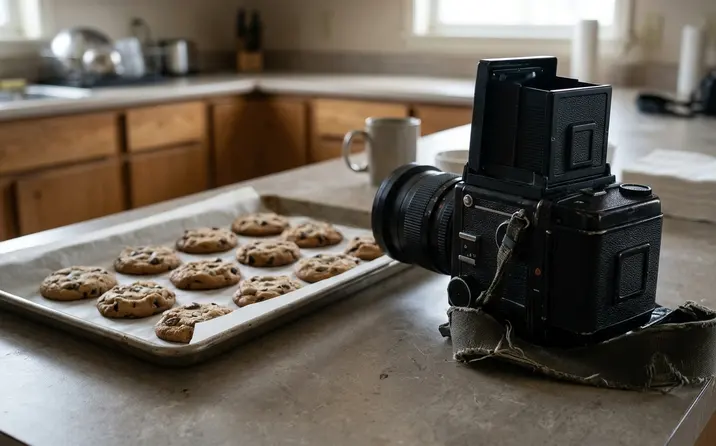
Shooting with a waist-level chimney or folding hood lowers the optical axis by 30 to 40 centimeters compared to a standard pentaprism, leaving the photographer's entire face exposed during an interview. You look down into the glass rather than staring through a lens barrel at someone's grief. The physical steps required to make an image with this gear establish what we call mechanical leaf-shutter latency—the mandatory 90-second to 4-minute physical sequence of leveling a tripod, reading an incident meter, cocking the barrel lever, and pulling a dark slide that gives a grieving subject repeated off-ramps to withdraw consent.
- Extend and level the support: Releasing three carbon-fiber tripod leg sections and locking the head anchors the camera in a single, predictable spot in the room.
- Measure the ambient light: Walking over to the subject to take an incident reading with a handheld light meter turns exposure calculation into a shared physical boundary.
- Arm the mechanical lens: Cocking the leaf shutter on the lens barrel and pulling the dark slide from a 6x7cm or 4x5-inch back produces distinct metallic clicks that announce the exact moment of readiness.
Visible clumsiness shifts the power dynamic in cramped quarters. When a setup takes up to four minutes to prepare, the person sitting across from you has ample time to object, adjust their posture, or ask questions about where the photograph will appear.
Where the Heavy Tripod Stays in the Bag
Reloading a 120 roll-film back under tension takes 45 to 75 seconds in dry conditions and yields only 10 exposures on a 6x7cm frame, compared to swapping a dual-slot memory card in under 5 seconds for more than 1,200 raw frames. Acute kinetic phases during coastal evacuations or urban street clashes typically demand rapid positional shifts every 15 to 40 seconds. In those moments, a three-legged support system becomes an immediate tripping hazard for both the journalist and fleeing residents.
Photo editors and wire photographers rightly point out that fast-moving environments do not wait for manual focus or film loading. Deliberate, tripod-bound mechanical photography becomes a severe safety liability during active civil unrest, sudden tsunami or cyclone evacuations, and volatile crowd surges where peripheral awareness and immediate mobility dictate survival.
Field Cadence Boundaries
Evaluating assignments as binary options between wire-speed extraction and slow contemplation misses how field crises evolve hour by hour. We use a two-phase deployment strategy: wire-speed digital bodies are restricted to the initial hours of acute physical danger, while heavy mechanical systems come out once residents reach temporary shelter.
Recognizing the post-kinetic transition threshold—the operational boundary once a cyclone evacuation or street surge settles into static shelter life, where retaining a 30-fps silent shutter stops being a safety necessity and becomes an extractive shortcut—separates breaking news reflexes from long-form documentary work. Once the immediate physical danger passes, failing to switch to a slower cadence is an ethical failure.
Afternoon Rain and a Single Frame in a Makeshift Shelter
During a late-2023 assignment documenting coastal fishing families living in temporary tin-and-tarpaulin halls after a severe tropical cyclone in the South Pacific, I left my canvas camera bag unlatched on the damp concrete slab rather than arriving with a strap across my chest. The air inside the corrugated-iron shelter sat at roughly 85% relative humidity while afternoon rain hammered the roof.
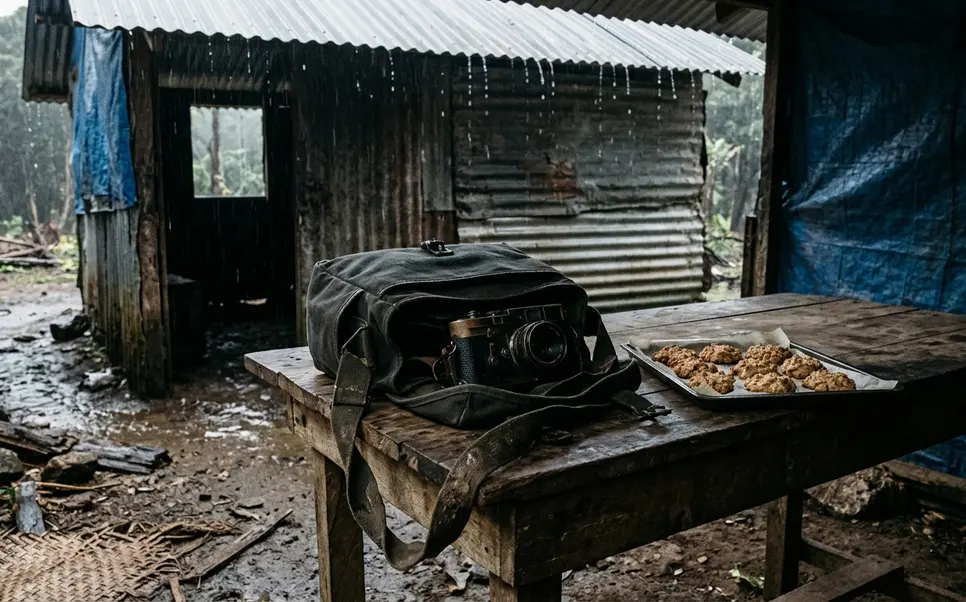
For 65 minutes, a displaced fisherman and I sat on a woven floor mat drinking lukewarm tea from enamel mugs and discussing his lost gillnets. The heavy brass-and-aluminum body rested untouched on the ground between us.
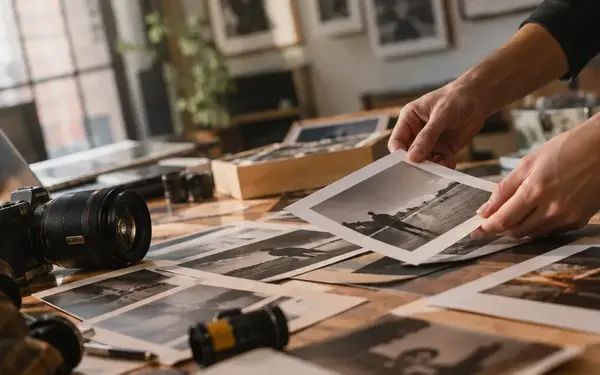
Only after an hour of listening did I unfold the tripod legs, step toward him with a handheld meter, and cock the lens barrel. I metered the single exposure at f/5.6 for a 1/15-second leaf-shutter actuation on 400-speed black-and-white negative film. When I pressed the cable release, the mechanical blades opened and closed with a distinct, audible click that both of us heard start and finish, anchoring a moment of mutual dignity in the quiet room.